


BACKSTAGE Event
BACKSTAGE Event is an Istanbul-based corporate event and MICE organization company. Our expert team specializes in congresses, conferences, product launches, and gala events, bringing every project from backstage to the stage.

If you are searching for a festival in Istanbul, you have picked the right city and — depending on the month — possibly the wrong week. Istanbul runs festivals almost year-round: jazz on historic rooftops in July, tulips filling the parks in April, electronic stages by the Bosphorus in early summer, film weeks in spring, and open-air concerts scattered across the warm months. Add the rest of Turkey — Cappadocia's valleys, Antalya's coast, Bodrum's summer season — and festivals in Turkey become less a single event and more a calendar you plan around.
This guide is that calendar. It covers the major music, culture and seasonal festivals in Istanbul and across Turkey for 2026–2027, month by month, with practical notes on tickets, transport and timing — and a look behind the stage at how these events are actually produced, which is the part we know best.
Last updated: July 2026. Festival dates shift slightly each year — always confirm the exact days on the organiser's official announcement before booking flights.
Table of Contents
- Why Istanbul Is a Festival City
- The Festival Calendar, Month by Month
- Music Festivals and Open-Air Concerts
- Jazz, Classical and the IKSV Season
- The Tulip Festival and Spring in the Parks
- Religious Holidays and Cultural Festivals
- Festivals Beyond Istanbul: Cappadocia, Antalya and the Coast
- Tickets, Transport and Practical Planning
- Behind the Stage: How a Festival Is Actually Produced
- Planning an Event Around a Festival — or Building Your Own
1. Why Istanbul Is a Festival City
Three things make Istanbul unusual among festival destinations, and they explain why the city's event calendar keeps growing while many European festival markets have plateaued.
The venues are the attraction
Most cities build festival grounds. Istanbul already has them: courtyards of Ottoman-era buildings, parks overlooking the Bosphorus, converted industrial halls on the Golden Horn, beaches within an hour of the centre, and modern arenas and convention venues on both continents. A jazz set in a 500-year-old courtyard or an electronic stage with the strait behind it is not something a purpose-built site can copy. Organisers use this deliberately — the same festival often plays several very different venues across one edition.
The season is long
Coastal weather stretches the open-air season from April to late October. Spring belongs to tulips, film and city culture; early summer to the big international music programmes; July and August to open-air concerts and coastal festivals; September and October to electronic events and harvest-season culture. Winter moves indoors but does not stop — arena concerts, theatre and gastronomy weeks continue through the cold months.
Two continents, one audience
Istanbul draws festival audiences from Europe, the Gulf, Central Asia and increasingly South Asia. Line-ups reflect that: a single summer weekend can offer a Turkish pop headliner, an international DJ set and an Anatolian folk programme. For visitors, this means there is almost always something happening in a language or genre you follow — the question is finding it, which is what the next section is for.
2. The Festival Calendar, Month by Month
Exact dates change every year and are usually announced three to six months ahead. The rhythm below, however, is stable — it is the pattern the city has followed for years.
| Month | What happens in Istanbul | Elsewhere in Turkey |
|---|---|---|
| January–February | Arena concerts, theatre season, indoor gastronomy weeks | Ski-season events in Uludağ and Erciyes |
| March | City culture events, pre-season announcements | Nevruz celebrations across Anatolia |
| April | Tulip Festival in the parks, Istanbul Film Festival | Spring culture festivals |
| May | Open-air season opens; electronic and indie events | Coastal season begins in Antalya and Bodrum |
| June | Istanbul Music Festival (classical), open-air concerts | Cappadocia culture events |
| July | Istanbul Jazz Festival, rooftop and park concerts | Coastal festivals at full strength |
| August | Open-air concerts, beach events near the city | Bodrum and Çeşme peak season |
| September | Electronic festivals, harvest events, corporate season opens | Cappadocia balloon-season culture events |
| October | Autumn culture programmes, late open-air weekends | Wine-harvest events in Thrace and Cappadocia |
| November | Indoor concerts, theatre festival season | Antalya film and culture events |
| December | New Year concerts and city celebrations | Hotel and resort season events |
Two planning rules follow from this table. If your priority is open-air music, aim for May–September. If you want the city at its most photogenic with mild weather and lighter crowds, April (tulips) and October (autumn light) are the quiet winners.
To make that concrete, here are the two itineraries we most often see work:
The long weekend (3–4 nights)
Pick one anchor event — a jazz festival night in July, a Saturday open-air concert in June, or a tulip-park morning in April — and leave the other evenings open for the boutique layer: a rooftop set on Friday, a courtyard concert on Sunday. Istanbul rewards unplanned evenings more than most cities, because the small events are announced too late for trip planning anyway.
The festival-plus-coast week
Fly into Istanbul for the city festival you care about, spend three or four nights, then take the one-hour flight to Bodrum, Izmir or Cappadocia for the second half. June and September are the sweet spots when both halves of that trip are in season at once — July and August tilt the value toward the coast, April and October toward the city.
3. Music Festivals and Open-Air Concerts
Music is the backbone of the Istanbul festival calendar, and it splits into scenes that behave differently.
Electronic and techno
Istanbul has become a serious stop on the European electronic circuit. International festival brands run city editions in spring, and independent techno and house events fill warehouse venues and open-air sites from May to October. A techno festival in Turkey today is as likely to happen in a converted shipyard or a forest clearing outside the city as in a club — line-ups are announced late, tickets sell fast, and the after-party culture is its own ecosystem. Cappadocia has also joined the map with valley events in the shoulder seasons.
Pop, rock and open-air concerts
Summer evenings bring open-air concerts across the city — parks, historic open-air theatres, and waterfront stages. Turkish pop and rock headliners dominate, with international acts concentrated in June and July. Many of these are single-night events rather than multi-day festivals, which makes them easy to add to a holiday itinerary: check the month's concert listings when you arrive, and you will usually find two or three options within a short ride of your hotel.
Rooftop and boutique events
A quieter layer sits between the big names: rooftop festivals, courtyard concerts and boutique one-day events, typically capped at a few hundred guests. They rarely advertise internationally, and they are where locals actually go. Hotel concierges and the city's event listing platforms are the reliable way in.
What to expect at an Istanbul open-air show
A few things surprise first-time visitors. Doors open early but headliners go on late — a 20:00 ticket often means a 22:30 main set, especially in high summer when the heat only breaks after dark. Food and drink inside open-air sites is card-only at most events and priced like any European festival. Security checks are standard and efficient; large bags slow you down more than anything else. And the audience sings — Turkish crowds know every word of every local headliner's catalogue, which turns even a mid-sized park concert into something closer to a stadium chorus. It is one of the best reasons to pick a Turkish headliner over an international name you could see anywhere.
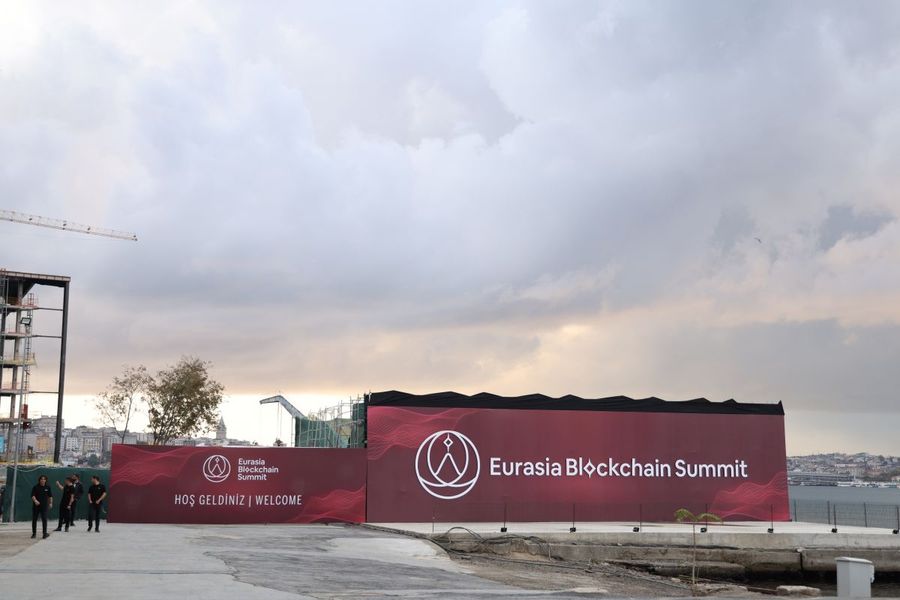 Open-air event site build on the Istanbul waterfront with branded perimeter and welcome gate — BACKSTAGE Event production
4. Jazz, Classical and the IKSV Season
The Istanbul Foundation for Culture and Arts (İKSV) runs the two festivals that anchor the city's cultural reputation: the Istanbul Music Festival in June, classical and staged in historic venues that are otherwise closed to concerts, and the Istanbul Jazz Festival from late June into July, spread across parks, rooftops and open-air theatres. Around them sit a film festival in April, a theatre festival in autumn and a design biennial cycle.
Both have a guide of their own: the classical and jazz season explained — which festival is which, where they are staged, and how tickets work from abroad.
5. The Tulip Festival and Spring in the Parks
Every April, Istanbul's parks fill with millions of tulips planted by the municipality — Emirgan Park on the Bosphorus is the centrepiece, with Gülhane Park and Göztepe following. The Istanbul Tulip Festival is free, family-friendly and genuinely spectacular in a way photographs undersell: carpet-scale plantings, themed displays and several weeks of related pop-up events.
Practical notes: peak bloom is usually early-to-mid April but shifts with the weather; weekends in Emirgan get crowded by late morning, so go on a weekday or before 10:00; and combine it with a Bosphorus-side breakfast, because the park sits directly above the waterfront road. For a deeper dive — including how the festival pairs with spring wedding and corporate-event season — we cover the tulip season in its own guide each autumn.
6. Religious Holidays and Cultural Festivals
Turkey's two major religious holidays reshape the events calendar and are worth understanding even if you are not travelling for them.
Eid al-Fitr (Ramazan Bayramı) ends the fasting month of Ramadan and brings three days of public holiday, family visits and festive city energy — plus special iftar and bayram programmes in hotels and public squares during the preceding month. Eid al-Adha (Kurban Bayramı) is the longer holiday later in the lunar year. Both shift roughly eleven days earlier each year, so check the civil calendar for 2027 dates before planning.
For visitors, the holidays cut both ways: museums and restaurants stay open and the city is lively, but domestic travel peaks — flights and coastal hotels fill early. For event planners, the bayram weeks are dates to plan around rather than into, and corporate calendars in Turkey treat them exactly that way. Beyond the religious holidays, the city runs cultural celebrations through the year — Republic Day concerts in late October, Nevruz in March, and neighbourhood culture festivals that rarely reach English-language listings but are easy to stumble into.
7. Festivals Beyond Istanbul: Cappadocia, Antalya and the Coast
Cappadocia has become Turkey's most atmospheric festival backdrop: valley concerts, boutique electronic events and balloon-season culture programmes, concentrated in May–June and September–October when the weather is right for open-air valley stages. The combination of sunrise balloons and evening valley sets is unique in Europe and increasingly attracts destination-event planners as well as festival-goers.
Antalya and the coast run a summer-long season: beach clubs with weekly international DJ programmes, the city's film festival in autumn, and food and culture festivals through the warm months. Bodrum and Çeşme concentrate the premium end — yacht-adjacent beach events, one-night pop-ups and club residencies in July and August.
If you are choosing one region outside Istanbul for a festival-centred trip: Cappadocia for atmosphere and photography, the Aegean coast for beach-club energy, Antalya for combining festivals with a resort holiday.
8. Tickets, Transport and Practical Planning
Tickets
Major festivals sell through Turkey's main ticketing platforms; international cards work, and e-tickets are standard. Prices are announced per edition, but as a 2026 orientation: single-night open-air concerts commonly land in the €20–60 range, festival day passes €40–90, and premium international headline events above that. İKSV festival single-venue tickets start lower than comparable Western European festivals — one reason the jazz festival draws so many visiting regulars.
Timing
Line-ups for summer festivals are typically announced between February and April; electronic events announce later. If your trip depends on a specific festival, book refundable accommodation when the edition is announced and add flights once dates are confirmed.
Sold-out strategy
Popular electronic events and international headline nights do sell out. Official resale, where offered, is the only safe channel — informal resale around venue gates is common but counterfeit-prone, and gate staff scan every code. If an event you wanted is gone, check the same weekend's listings before giving up: the density of the Istanbul calendar means a credible plan B almost always exists within the same two or three nights.
Getting around
Festival venues split between the historic centre, the Bosphorus shore and out-of-town open-air sites. Metro and ferries cover the first two; out-of-town sites usually run shuttle programmes from central meeting points. For groups, arranged transfers are worth it — surge-hour taxis after a big open-air show are the one reliably bad experience in the system. (It is also the logistics problem we solve most often for corporate groups attending festivals — see our VIP transfer and logistics service.)
Weather
Open-air season is reliable June–September, but Istanbul can surprise with wind on exposed waterfront sites — take a layer for after midnight, even in August.
9. Behind the Stage: How a Festival Is Actually Produced
We spend our working lives on the other side of the barrier, so here is the part most festival guides skip: what it takes to put a stage, sound and light in front of an audience in Turkey — whether for a public festival or a private open-air event.
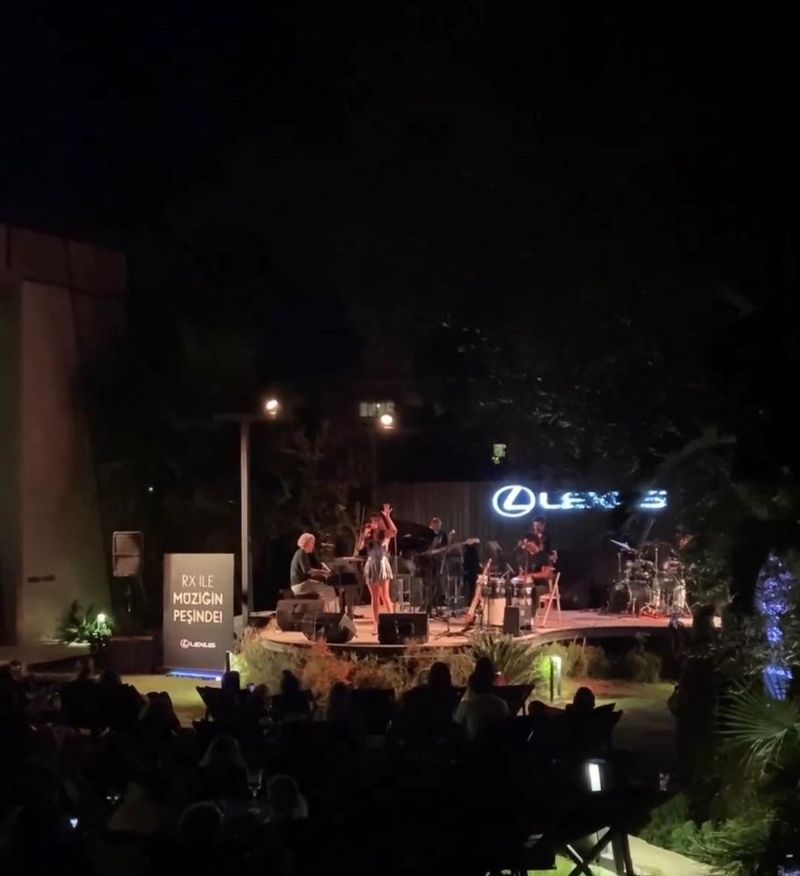 Live band performing at night on an open-air stage with full light rig and seated garden audience — open-air concert production by BACKSTAGE Event, Turkey
The site decides everything
An open-air site by the water needs wind-load calculations for every truss and LED surface; a historic courtyard imposes rigging restrictions that reshape the entire design; a park needs power generation, ground protection and a noise-curfew plan agreed with the municipality. This is why serious concert production in Istanbul starts with a site survey, not a stage render — a lesson we cover in depth in our stage design guide.
Permits and noise curfews are real
Open-air events in Turkey operate under municipal permits with defined end times and sound limits. Established organisers build their programmes around these; a private event that ignores them gets shut down. Factor the curfew into the running order from day one.
Local production partners carry the weight
International touring acts arrive with riders; Turkish production companies supply the stages, PA systems, lighting rigs, LED walls, backline, crew and generators that meet them. The equipment ecosystem in Istanbul is deep — the same supplier pool serves the festival circuit, brand launches and corporate shows, which is why production quality at a well-run private event matches what you see at the big public festivals. You can see what that scale of build looks like in our Eurasia Blockchain Summit congress production.
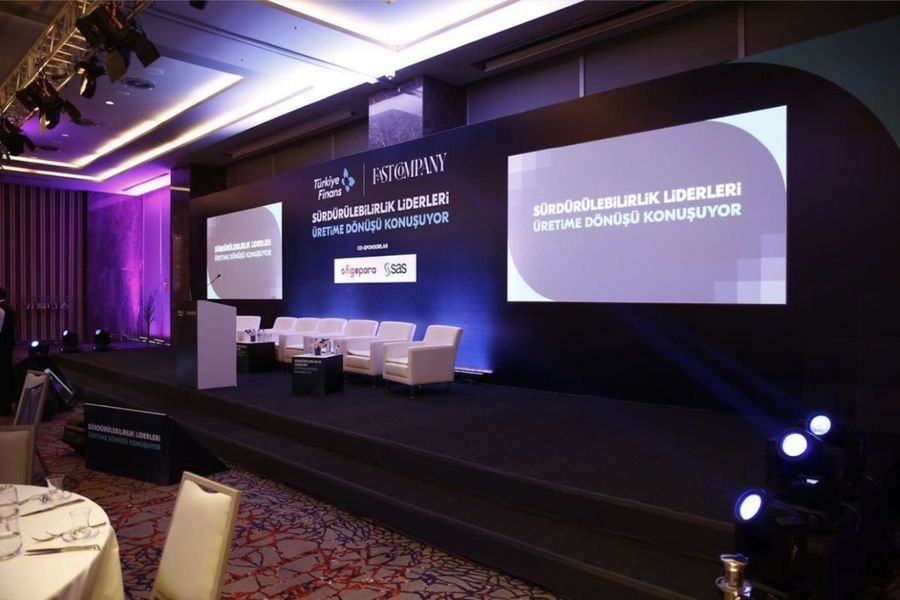 Corporate stage with LED screens and moving-head lighting in purple states — an example of the lighting design used across festival and corporate productions, BACKSTAGE Event
10. Planning an Event Around a Festival — or Building Your Own
Two groups of readers usually reach the end of a guide like this: travellers building a trip around the festival calendar, and companies or families planning an event of their own in Turkey — a brand activation during festival season, an incentive-group evening with a private concert, a launch that needs festival-grade production.
For the first group: pick your month from the calendar above, confirm dates on official announcements, and book the city early for April, June and July.
For the second: this is what we do. BACKSTAGE Event produces open-air concerts, brand festivals and full-scale corporate events across Istanbul and Turkey — stage, sound, light, LED, permits, site logistics and artist coordination under one roof, with our own festival and concert production team. We build product launches with concert-scale staging, run corporate events that borrow the best of festival production — and if your plans lean celebratory rather than corporate, our destination wedding guide and corporate event planning guide cover the neighbouring territory.
If you are planning an event in Turkey and want festival-grade production behind it, talk to us — we will tell you honestly what your site, date and budget can carry.
Frequently Asked Questions
When is festival season in Istanbul?+
The open-air season runs from April to late October, peaking between May and September. April brings tulips and film, June classical music, July jazz, and September–October electronic events. In winter the calendar moves indoors but continues with arena concerts and theatre.
When is the Istanbul Tulip Festival?+
Every April; peak bloom usually falls between early and mid-April and shifts with the weather. Emirgan Park is the centrepiece, followed by Gülhane and Göztepe. Entry is free. Visiting on a weekday or before 10:00 is the best way to avoid the crowds.
How much do festival and concert tickets cost in Istanbul?+
As a general 2026 pricing orientation: single-night open-air concerts mostly fall in the €20–60 range, festival day passes €40–90, with premium international headliners priced above that. İKSV single-venue tickets start lower than Western European equivalents. International cards work and e-tickets are standard.
What is the best month to combine festivals with a coastal holiday in Turkey?+
June and September. In both months Istanbul's city festivals and the coastal season are open at the same time, and Cappadocia's valley events also fall in these windows. July–August tilt the balance toward the coast, April and October toward the city. The Istanbul–Bodrum/Izmir/Cappadocia flight takes about an hour.
Can a company organize a private festival or open-air concert in Turkey?+
Yes. Open-air events run under municipal permits with defined end times and sound limits; a site survey, wind-load calculations and generator power planning are essential. Istanbul's production ecosystem serves festivals, launches and corporate shows from the same supplier pool — with the right local partner, festival-grade quality is achievable at a private event.
Subscribe to Our Newsletter
Subscribe to our newsletter for event trends, design insights, and exclusive content.


